


Clinical Cognitive Neuroscience Center
Research
Obsessive-Compulsive Disorder
Obsessive-Compulsive Disorder
Key question. How does dysfunction of the cortico-striato-thalamo-cortical (CSTC) circuit give rise to obsessions and compulsions, and why do patients with the same diagnosis differ in onset, symptoms, and course?
Approach. We study a clinical cohort of patients with OCD, including medication-free patients, using structural, diffusion and functional MRI, neurocognitive tasks, and computational models of behavior. We take part in the ENIGMA-OCD working group. Our studies of treatment response in OCD are described under Neuromodulation and Neuropsychopharmacology.
Recent Findings
Pathophysiological Mechanisms
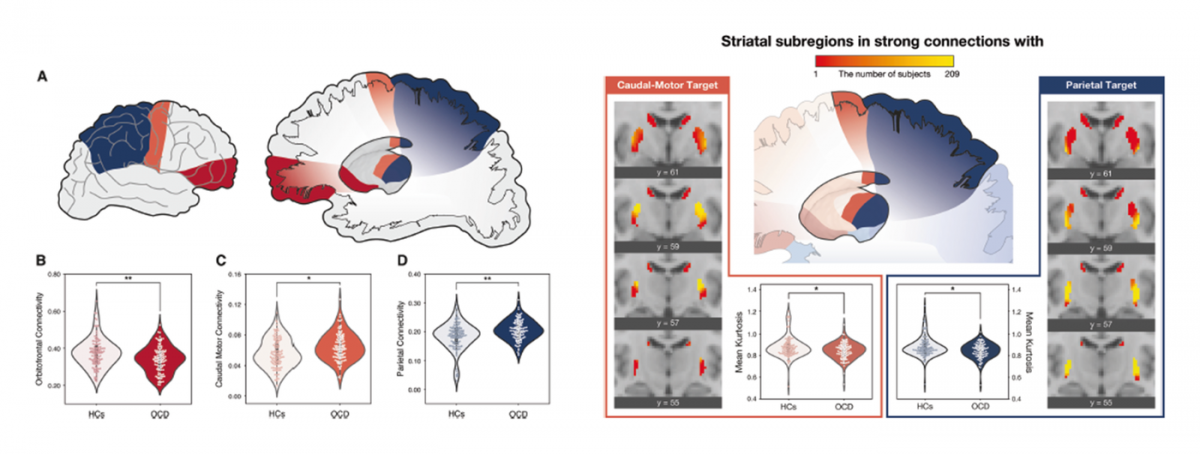
Patients with OCD showed reduced orbitofronto-striatal and increased motor- and parietal-striatal white matter connectivity, with altered microstructure in the corresponding striatal subregions (Park, Kim et al., Mol Psychiatry, 2022).
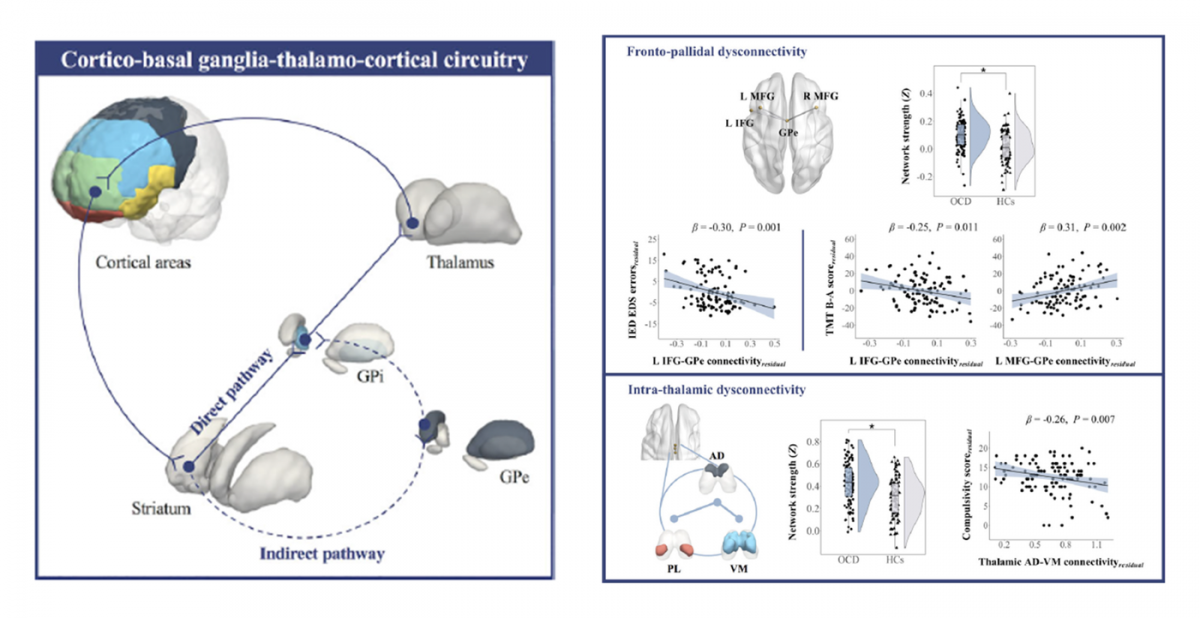
In OCD, fronto-pallidal dysconnectivity was related to impaired set shifting, and intra-thalamic dysconnectivity to compulsivity (Kim et al., Brain, 2022).
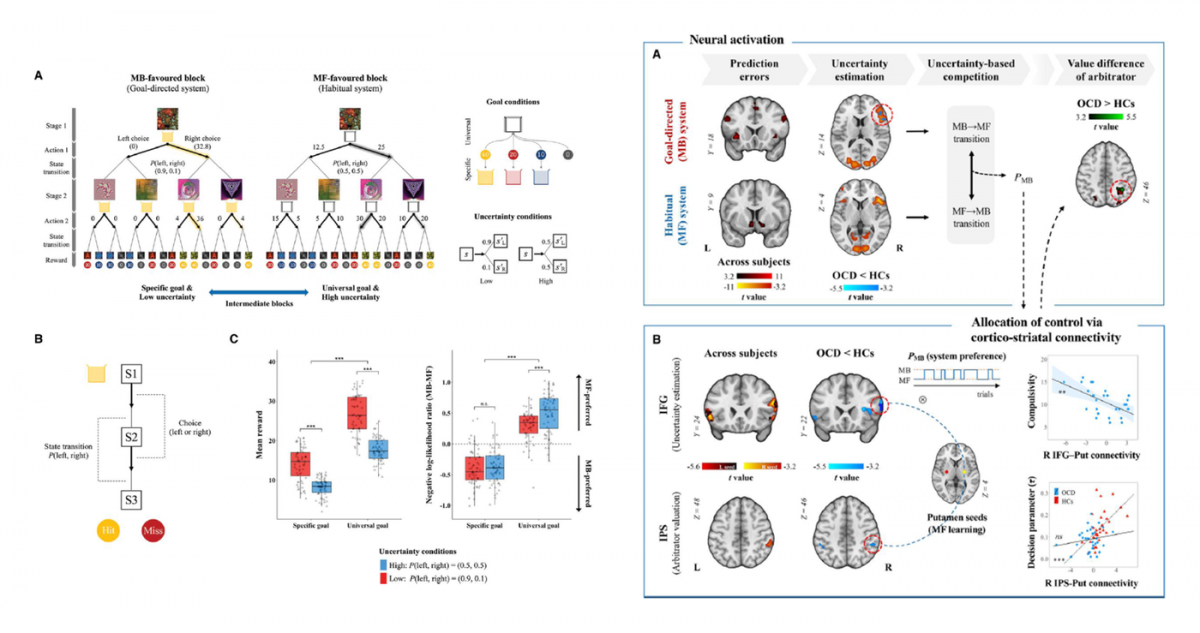
A neurocomputational model showed that compulsivity arises from a deviation from an uncertain goal-directed system (Kim et al., Brain, 2024).
Heterogeneity
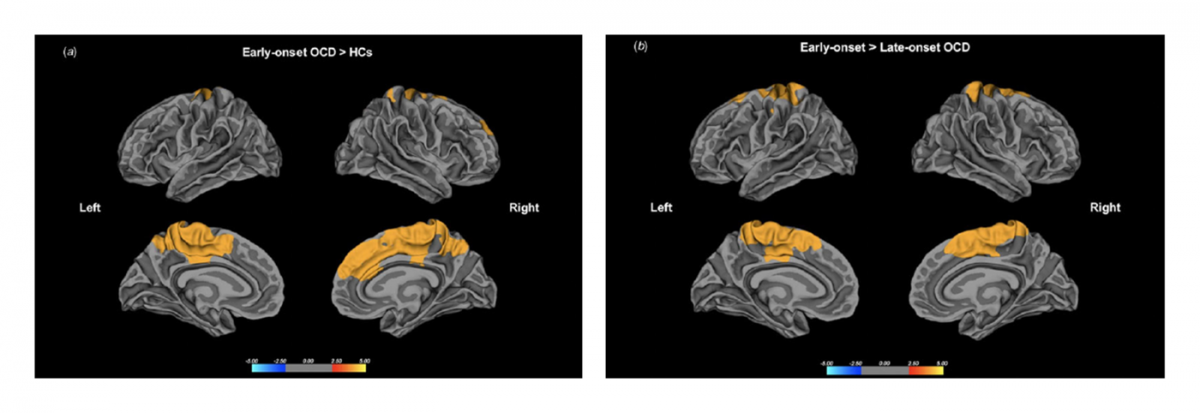
Early-onset OCD showed greater cortical gyrification than both healthy controls and late-onset OCD, suggesting neurodevelopmentally distinct subtypes (Park et al., Psychol Med, 2023).
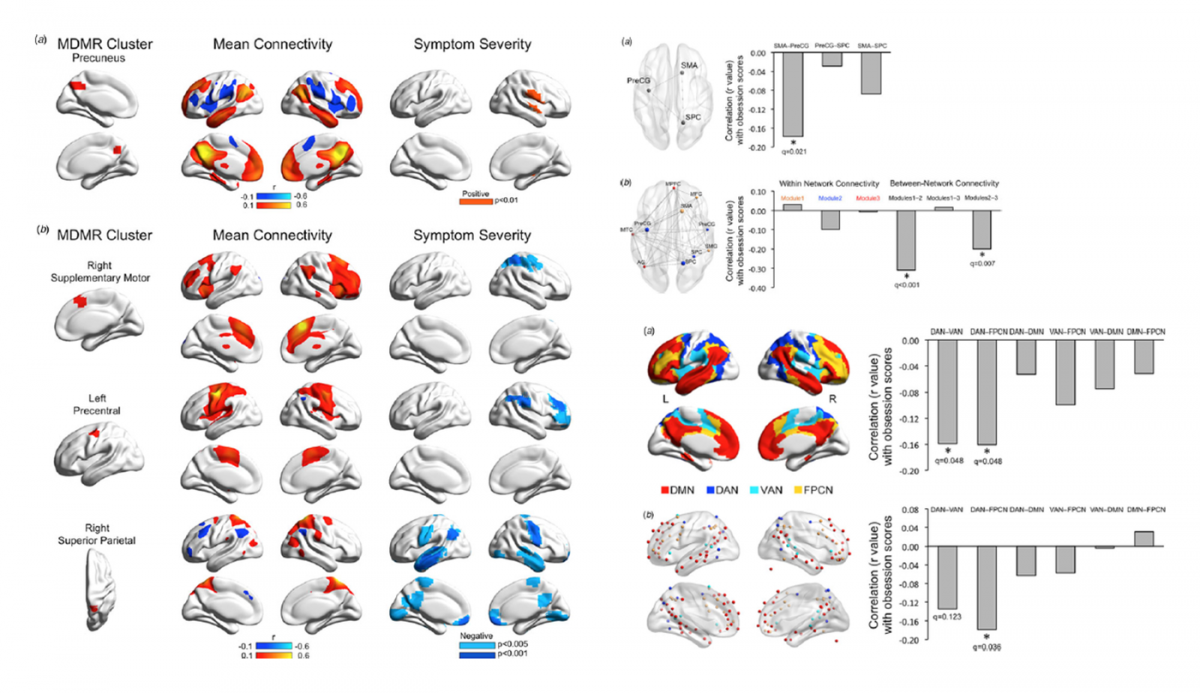
Obsessions and delusions were associated with distinct neural networks in a connectome-wide association study (Lee et al., Psychol Med, 2021).
Foundational Work
Fronto-striatal dysfunction was linked to impaired task switching in OCD (Gu et al., Brain, 2008).