


Clinical Cognitive Neuroscience Center
Research
International Consortium
The Psychosis-Risk Outcomes Network (ProNET) is part of the Accelerating Medicines Partnership Schizophrenia (AMP SCZ) program supported by the U.S. National Institute of Mental Health (NIMH). Experts from research sites around the world, including Seoul National University Hospital in Korea, work together to study young people at clinical high risk for psychosis and to develop tools that predict their outcomes.
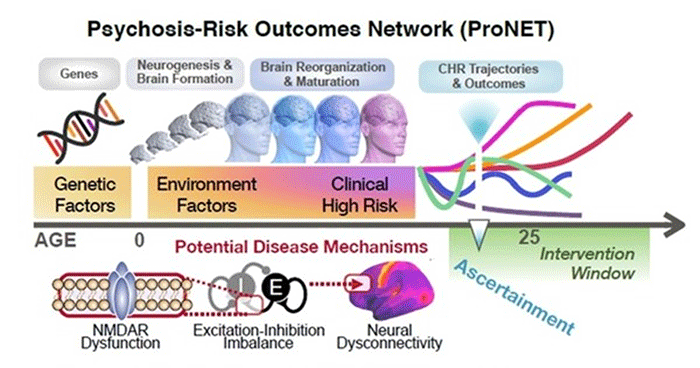 adapted from ProNET website
The international network of Psyscan for high-risk schizophrenia is comprised of 15 countries around the world, including Seoul National University in South Korea, and is designed to develop a project to create better cooperation and treatment for schizophrenia patients and therapists in clinical use.
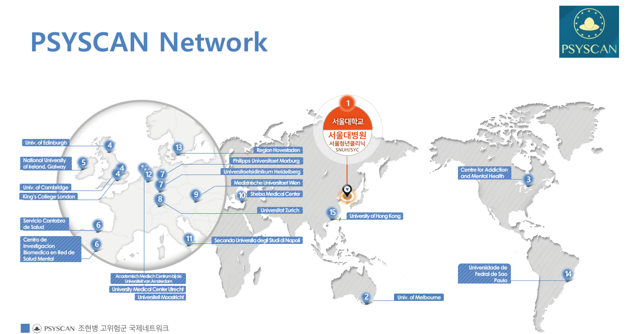 adapted from PSYSCAN website
The ACMP is the first Asian international multi-center clinical neuroimaging consortium consisting of 16 institutes from Asian countries including Seoul National University in Korea to provide neural basis of psychotic disorders and to apply neuroimaging findings to clincal use.
 adapted from ACMP website
The ENIGMA Network brings together researchers in imaging genomics to understand brain structure, function, and disease, based on brain imaging and genetic data. There are 50 active ENIGMA working groups, including schizophrenia, clinical high risk for psychosis, and obsessive-compulsive disorder (OCD) working groups.
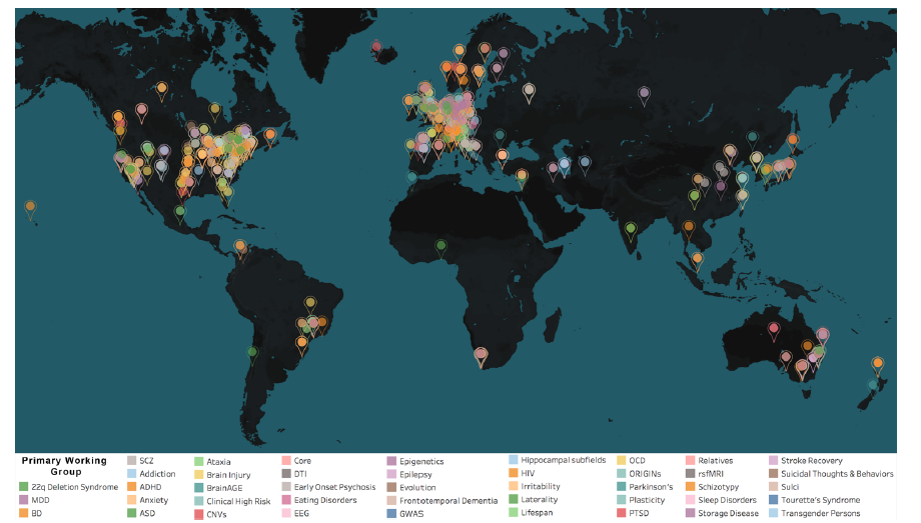 adapted from ENIGMA website
The ENIGMA schizophrenia Working Group is an international collaboration project to develop research studies and therapy of mental illness for patients and therapists, working with schizophrenia experts from approximately 120 institutions and universities around the world, including Seoul National University in Korea, to provide better treatment.
The ENIGMA Clinical High Risk for Psychosis Working Group brings together neuroimaging data from individuals at clinical high risk for psychosis at sites worldwide, including Seoul National University in Korea, to identify brain alterations associated with psychosis risk and onset.
The ENIGMA-OCD Working Group aims at bringing OCD research groups together to share neuroimaging and genetic databases, and initially started in 2010 as the OCD Brain Imaging Consortium (OBIC). Currently the ENIGMA-OCD working group is an international collaboration including 32 research groups from 16 different countries worldwide, including Seoul National University in Korea.